

Call now for a confidential consultation with Elizabeth • Atlanta: (770) 475-0862 • Beverly Hills (310) 776-7588

TVT Sling Complications

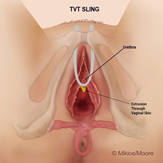
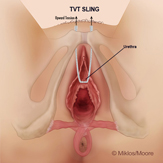
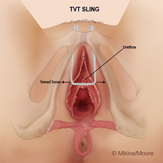
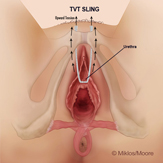
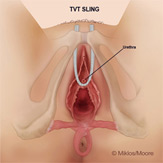
Although the TVT sling is considered the standard of care in sling surgery today, complications can still occur. It is very important to note that it typically is NOT the mesh itself or the procedure that is the cause of the complication, it is how the mesh is placed or how the body heals around the mesh that is the underlying cause. For example, if a patient is a smoker, her tissue is not as well vascularized as a non-smoker and therefore she is at higher risk of the incision not healing well and then a mesh extrusion occurs. This is NOT the mesh’s fault and this patient is a high risk of complications with ANY surgery, whether mesh was used or not. Studies have actually shown that the TVT sling has HIGHER cure rates than traditional surgery for incontinence (ie the Burch or MMK) with LOWER complication rates. TVT sling (Gynecare, Johnson and Johnson) was the first sling of this type on the market and now many other companies have similar products such as the SPARC procedure (American Medical Systems) and others by Bard Urology, Boston Scientific, etc. All of these slings are essentially the same as the TVT as they use needles passed through the abdominal wall and an incision under the urethra to place the mesh tape sling.

Below are examples of TVT-type Slings

*Indicates company provider

Complications known to occur are as follows:

Mesh Extrusion or exposure vaginally:

Typically rate  of <1% and not considered a major complication. Typically needs a minor  vaginal repair of the exposure and/or trimming of the exposed mesh. Usually the  whole sling does not need to be removed as it is a localized healing defect  that the mesh worked its way through the vaginal skin and is exposed. The mesh  is usually not infected or being rejected and therefore only the exposed  portion needs treated. Many women don’t know they have an exposure until their  partner may complain of getting cuts or abrasion during intercourse.  It can also cause vaginal spotting or discharge.  (see treatment section for more details).

Mesh Erosion into the bladder:

If this occurs, this  can cause bladder pain, recurrent bladder or urinary tract infections (UTI’s),  blood in the urine, or other urinary symptoms such as frequency, urgency, or  painful urination. If a patient is having these symptoms, an office cystoscopy  (looking into the bladder with a very small scope) should be completed to  ensure that the mesh has not eroded into the bladder. If the mesh is in the  bladder, it will need to be removed. Most surgeons will recommend a major  operation with a large incision in the abdomen to remove the mesh from the  bladder. Drs. Moore and Miklos are one of the only centers in the world that are  able to remove the mesh from the bladder via a laparoscopic approach (ie an  outpatient type procedure with mini-incision through the belly button). They  have published one of the only papers on the procedure (link to paper here) and have surgeons from all over  the US send patients to their center in Atlanta for this procedure. (see treatment section for more details)


Mesh infection or abscess formation:

This is a very, very rare complication when a Type I mesh is used. However, reports of infection, or rejection of the tape have been reported with other types of mesh, such as the IVS tape, which was a multifilament mesh and NOT Type I. When this occurs, typically the entire mesh tape needs to be removed.

Urinary Obstructive Symptoms:

If any sling is placed too tight, it can cause urinary retention (complete obstruction….ie patient cannot pee at all) or various amount of incomplete emptying syndromes. The patient may complain of a very slow stream (just dribbling out) or an intermittent one (ie start and stop and have to push very hard) and it is found she is not emptying her bladder completely. Most will agree that the post void residual (the amount of urine in the bladder after voiding) should be less than 100 or 125cc (about 3 oz). If the amount in the bladder is higher than this, then the sling could be too tight. It can also cause symptoms such as urgency, frequency and feeling the bladder is just not emptying. If this is found to be the cased, the sling needs to be loosened or released (see treatment section). Many patients come to us in Atlanta after suffering for months or years as they have been told that nothing can be done to aleve their symptoms. This is far from the truth as we can do an outpatient procedure to release or remove the sling that if the sling is obstructing will resolve the symptoms in over 99% of patients.

Vaginal and/or Abdominal Pain:

Occasionally, the mesh will heal in  a way, or was placed in a way that causes vaginal and/or abdominal pain. This  is again a very rare complication, however it is can occur in less than 1% of  cases. If the mesh is irritating a nerve in the abdominal wall, or is too tight  and pulling on the abdominal wall or vagina, this can cause significant pain during normal daily activities or with intercourse. If the pain is just  vaginally with intercourse, this can sometimes be approached with just a  vaginal procedure and removing or releasing the mesh through a small vaginal  incision. However, if the pain is in the abdomen or bladder as well, most of  the time the entire sling will need to be removed (see treatment section). Again, most surgeons will state that this needs to be done with a large abdominal  incision, however Drs. Miklos and Moore use a laparoscopic approach to remove the  sling and have been very selective in treating this type of problem.

TVT – Urinary retention / TVT- Leg, Vag Pain – Mesh Removal
TVT Sling – Mesh in Bladder – Pain, Vaginal Bleeding /
TVT-Perigee Complication – Vaginal Bulge, Suprapubic Pain / TVT sling - Recurrent prolapse, persistent urinary leakage, mesh extrusion / Vaginal pain, bloody urine, difficulty walking because of lower abdominal pain / TVT – Sling Tension Free Vaginal Tape (GYNECARE)


Call now for a confidential consultation with Carrie • Atlanta: (770) 475-0862 • Beverly Hills (310) 776-7588